

OMSI: 65 years of Italian excellence
65 YEARS OF SEATING THAT MAKES HISTORY
2026 marks an extraordinary milestone for OMSI S.r.l.: its 65th anniversary since its founding. It was 1961 when, in the thriving industrial area of Zola Predosa, just outside Bologna, a small manufacturing company was established—destined to become a global benchmark in the production and installation of plastic seating for stadiums, sports facilities, schools, and public spaces.
Sixty-five years is not just a number. It represents decades of continuous innovation, challenges faced and overcome, stadiums transformed, and stands brought to life with color, accompanying millions of fans, students, and spectators around the world. It is the story of a company that has managed to reinvent itself without ever betraying its identity: the quality of Made in Italy, attention to detail, and commitment to both the environment and the customer.
In this article, we retrace the key milestones of a journey that has taken OMSI from its very first polypropylene molds to today’s international projects worth tens of millions of euros, through prestigious collaborations, pioneering technological innovations, and a sustainable vision of the future that is more relevant today than ever.
1961–1970: THE ROOTS OF AN EXTRAORDINARY STORY
The history of OMSI began in 1961, during a period of strong economic growth in post-war Italy. The so-called “economic miracle” was transforming the country: factories were expanding, cities were growing, and a new middle class was discovering prosperity and consumer culture. In this dynamic context, three entrepreneurial partners decided to found a company in the industrial area of Zola Predosa, a municipality in the outskirts of Bologna that was becoming one of the beating hearts of Emilia’s industrial landscape.
La denominazione OMSI è l’acronimo di ‘Officina Meccanica Stampaggio Iniezione’, una sigla che racconta già tutto: l’azienda nasce come specialista nello stampaggio a iniezione di materiali plastici, una tecnologia all’epoca ancora relativamente giovane in Italia ma già affermatasi come rivoluzionaria per la produzione industriale di massa.
In its earliest years, production was diversified and primarily oriented toward the domestic Italian market. One of the three partners had gained significant experience in Argentina, where the market for plastic seating was already more developed: this international influence led OMSI from the very beginning to look beyond national borders, importing models and ideas that it would later reinterpret through its own manufacturing expertise.
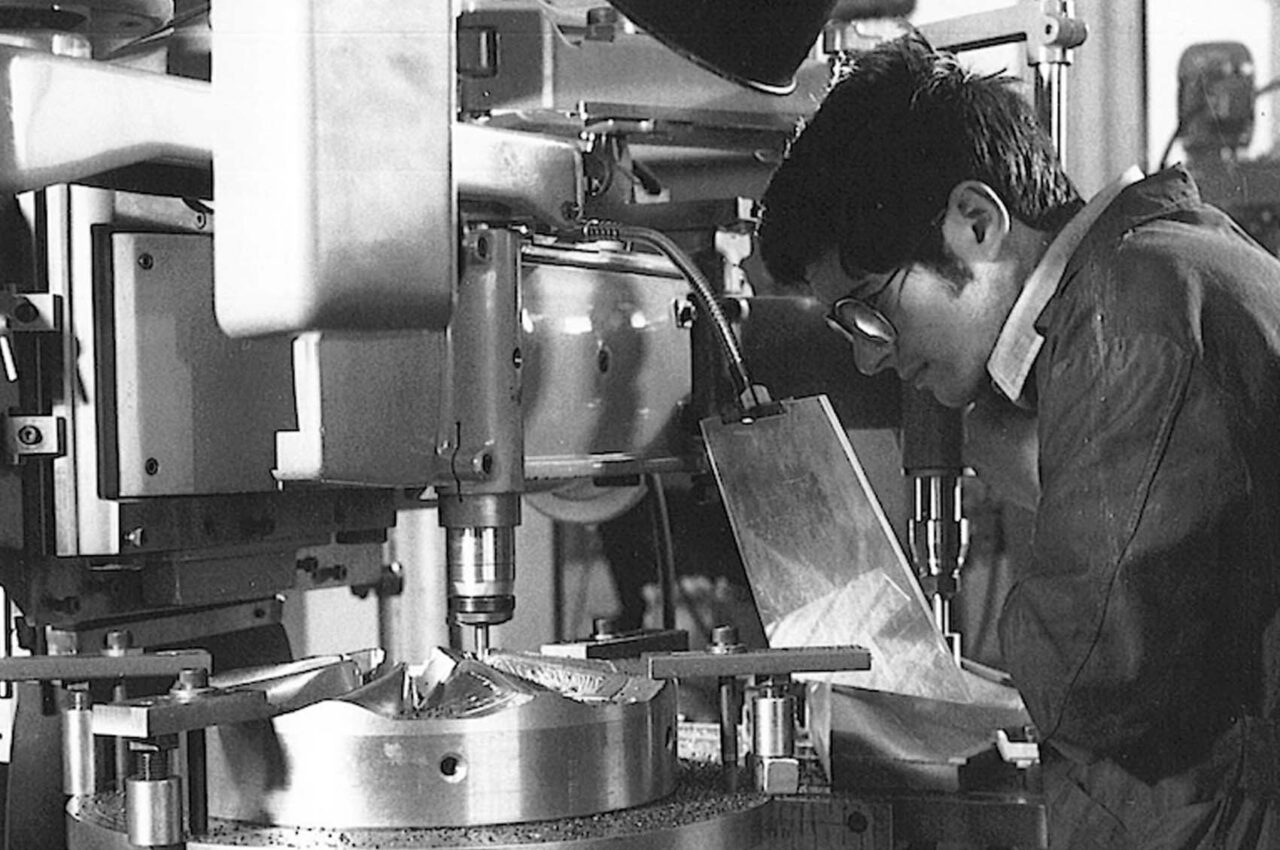
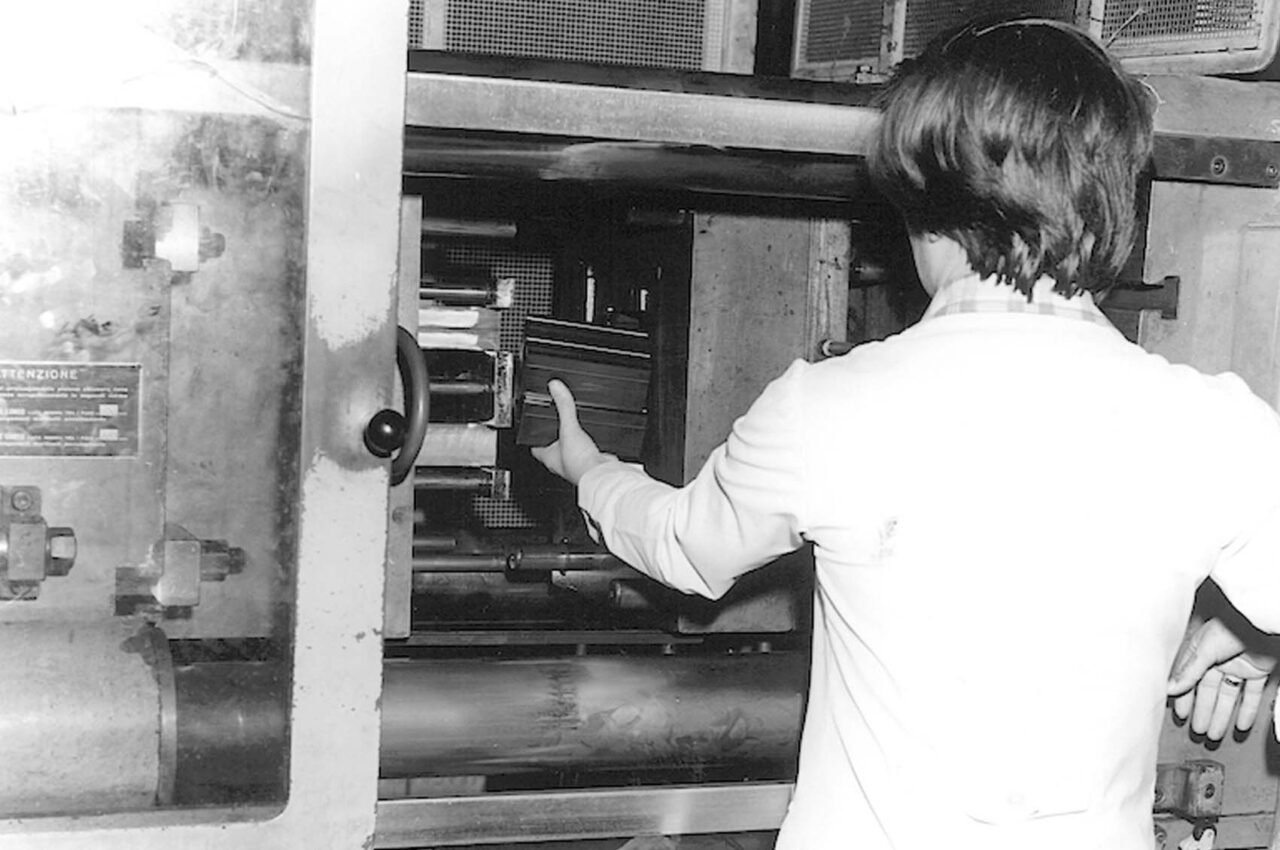
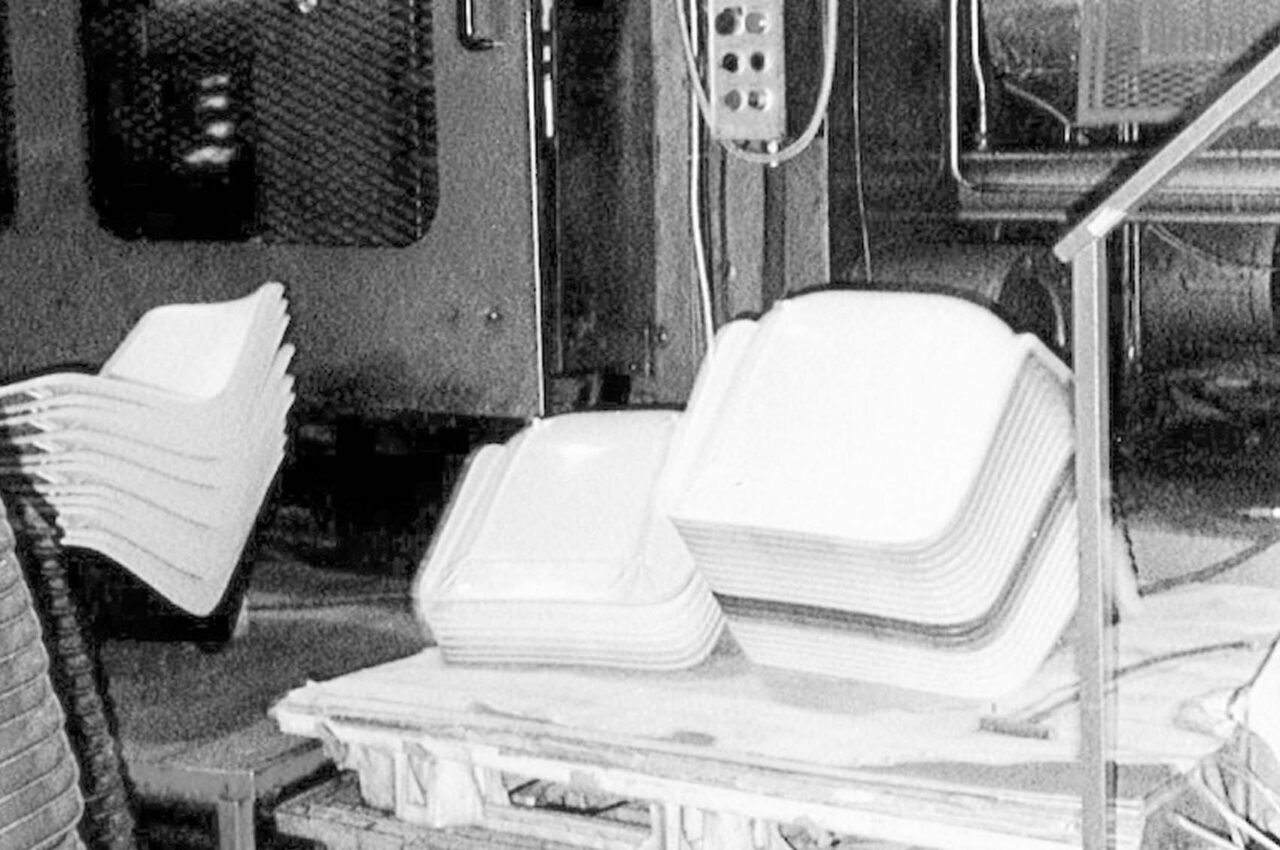
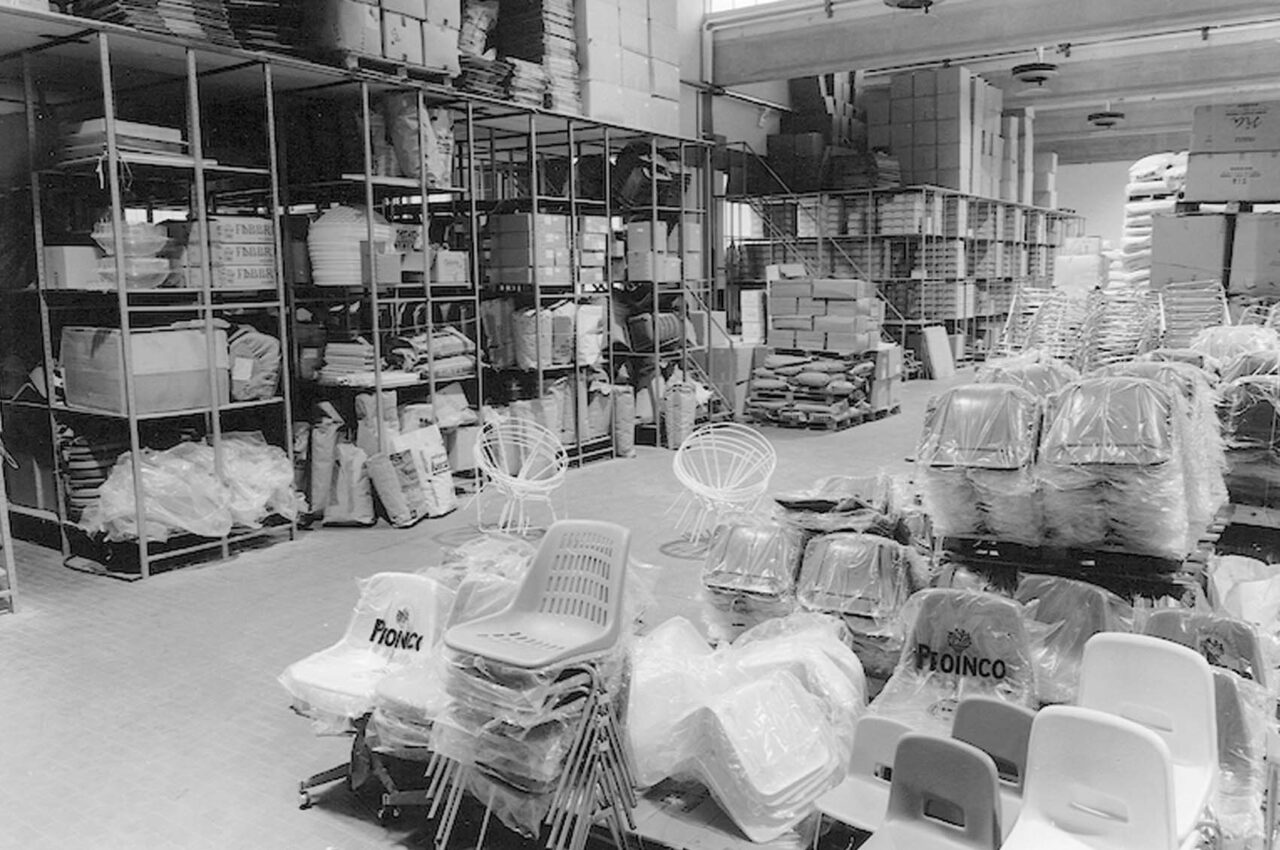
In 1967, the purchase of the first manual injection molding machine marked a decisive turning point: from that moment on, production increasingly shifted toward plastic seating. The first mold produced entirely in-house was a polypropylene seat with metal legs, called D5, which was launched on the market under the PRO.INCO brand (industrial commercial production) following the acquisition of the first GBF2000 automatic press.
1970–1989: CRESCITA DIVERSIFICAZIONE E L’ARREDO DA GIARDINO
The 1970s brought strong business expansion. Demand for plastic products grew rapidly across all sectors, and OMSI responded by broadening its production range. The decision to build a new, modern plant in the industrial area of Zola Predosa—where the company was permanently relocated in August 1972—was the most tangible sign of this growth.
The new facility made it possible to invest in increasingly powerful and precise machinery: injection molding presses reached capacities of up to 1,500 tons, enabling the production of larger and more complex parts. The number of employees gradually increased, and production became more diversified: OMSI no longer produced only seating, but also manufactured molds and a wide range of plastic items, both in-house and on behalf of third parties, serving a diverse customer base.
Il 1980 segna un’altra tappa fondamentale: la creazione di una linea di articoli in plastica per l’arredo da giardino. Si tratta di prodotti di alta gamma, fortemente innovativi per l’epoca: fino ad allora, il mobilio outdoor veniva realizzato prevalentemente in legno, con tutti i problemi di manutenzione che ciò comportava (verniciatura periodica, rischio di marcescenza, peso elevato). Le sedute e i tavoli in polipropilene di OMSI offrono resistenza agli agenti atmosferici, leggerezza, facilità di pulizia e durata nel tempo — caratteristiche che il mercato premia immediatamente.
The 1980s saw OMSI strengthen its position as a leading manufacturer of outdoor furniture, but its horizon was already shifting toward a sector that would forever change the company’s history: that of sports facilities.
1990–2001: ITALIA ’90 E LA NASCITA DEL CORE BUSINESS SPORTIVO
The most important football season in Italy’s history—the 1990 World Cup—became for OMSI a springboard into what would become its main market. As the event approached, Italian stadiums were modernized and renovated to meet FIFA standards, and concrete stands were equipped with individual fire-resistant seats.
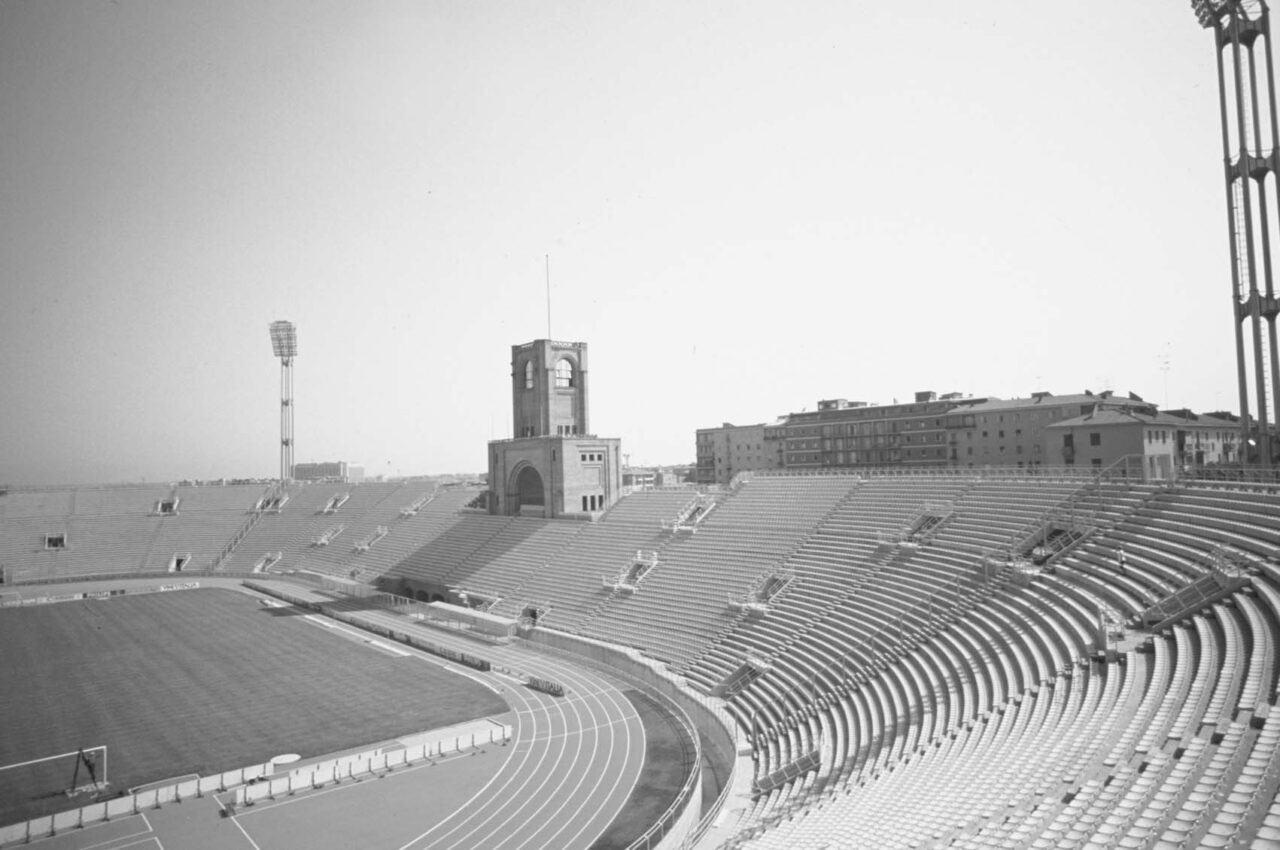
OMSI responded to this opportunity with entrepreneurial intelligence: the M90 and M92 models were created, the first OMSI seats specifically designed for sports facilities. Durable, ergonomic, and available in any color to create mosaics and chromatic patterns in the stands, the M90 and M92 were installed in historic stadiums such as the Renato Dall’Ara in Bologna, the Tardini in Parma, and the Sant’Elia in Cagliari.
The success of Italia ’90 proved to be a revelation: the sports facilities sector became OMSI’s core business. From that moment on, investment, research, and development were focused almost entirely on seating for stadiums, indoor arenas, sports halls, and auditoriums. The company acquired specialized engineering expertise, developed new molds and models, and built relationships with major sports clubs and international federations.
In the second half of the 1990s, OMSI was already a recognized name in the sports seating industry. Its products were designed in accordance with FIFA, UEFA, and FIBA standards—a fundamental prerequisite for operating in major international markets. The commercial network gradually expanded beyond Italy’s borders, with the first major contracts in Europe and beyond.
2002: L’INGRESSO NEL GRUPPO TWINS — UNA SVOLTA GLOBALE
2002 was a landmark year in OMSI’s history: the Bologna-based company became part of the TWINS Group, the world leader in the production of plastic seating components, with a presence across five continents. This transaction was not simply a change of ownership; it marked the definitive projection of OMSI onto the global stage.
L’integrazione nel Gruppo TWINS apre a OMSI porte fino ad allora inaccessibili: commesse internazionali di grande prestigio, accesso a reti di distribuzione capillari in ogni angolo del mondo, sinergie produttive e tecnologiche con aziende partner di primissimo piano. Allo stesso tempo, OMSI mantiene la propria identità italiana: il design, la qualità manifatturiera, la cura nella gestione del cliente restano caratteristiche distintive e inconfondibili.
In the early years following its entry into the group, OMSI consolidated its presence in Europe and began a systematic expansion into the Middle East, North Africa, and Latin America—regions that would go on to become key players in major projects in the following decades. The guiding principle was “glocal”: thinking globally while maintaining Italian sensitivity and craftsmanship.
L’ERA DELL’INNOVAZIONE: DESIGN, SOSTENIBILITÀ E PININFARINA
Se c’è un fil rouge che attraversa tutta la storia di OMSI, è la ricerca incessante dell’innovazione — tecnologica, estetica, ambientale. Nel corso degli anni Duemila e Dieci, questo impulso si concretizza in una serie di iniziative che proiettano l’azienda all’avanguardia del settore.
The collaboration with Pininfarina
Among the most prestigious chapters in OMSI’s recent history is the collaboration with Pininfarina, the legendary Turin-based design studio renowned worldwide for shaping some of the most beautiful Italian automobiles. This partnership led to the creation of the “Leonardo” and “Caravaggio” seating lines, which represent the perfect synthesis of sporting functionality and aesthetic refinement.
Caravaggio is a tip-up seat for stadiums and sports facilities with a modern, elegant design: simple yet refined lines, a seat and backrest made of high-quality polypropylene, and a load-bearing structure in polyamide. Available with armrests and padding, it complies with FIFA, UEFA, CAF regulations and is FIBA approved. The name of the famous Italian Baroque painter is not accidental: it evokes beauty, technical mastery, and a deep connection with Italian cultural identity.
Leonardo, in its Gold and Silver versions, is an armchair with a unique design, characterized by modern and elegant lines and welcoming, harmonious curves. It represents the perfect combination of comfort and luxury, delivering the highest level of quality and durability, making it ideal for installation in the most prestigious areas of a sports facility.
The collaboration with Pininfarina is a powerful statement: OMSI does not produce simple stadium seats, but design objects that help define the aesthetics and atmosphere of sports facilities around the world.
L’impegno per la sostenibilità ambientale
In an era in which sustainability has become a strategic imperative for every responsible company, OMSI has distinguished itself as a pioneer in the practical application of the principles of the circular economy to the sports facilities sector.
The program for the collection and recycling of used seats is one of the most distinctive elements of OMSI’s offering. The company provides the option of taking charge of the removal of seats at the end of their useful life, sending them through a recycling process: washing, separation of materials according to their nature and technical quality, and transformation into new raw material. The result is remarkable: this process enables a 43.7% reduction in the extraction of raw materials from the environment.
OMSI’s environmental commitment goes beyond simple recycling. The company is in fact the first in the world to have obtained the EPD (Environmental Product Declaration) certification for its M2020 sports seat. The EPD certification transparently and verifiably documents the environmental impact of its products throughout their entire life cycle. In addition, OMSI uses copolymer polypropylene derived from separate waste collection and/or industrial sources, certified as “Plastica Seconda Vita”, enabling the production of seats with a significantly more favorable environmental profile compared to traditional products.
The M2025 seat—the latest model developed to comply with the new FIFA 2030 criteria—embodies this philosophy: it can be produced using certified recycled materials, features a 46 cm width to ensure greater spectator comfort, and fully aligns with OMSI’s sustainability strategy. As the company’s team has stated, M2025 is not just a furnishing component: it is a step toward a greener and more responsible future.
THE MAJOR PROJECTS: STADIUMS AND ARENAS THAT MADE HISTORY
In 65 years of activity, OMSI seats have found their place in some of the most iconic and prestigious sports facilities in the world. Revisiting these projects means reliving some of the most thrilling chapters of international sport: stadium stands silent before the roar of a goal, indoor arenas vibrating during a championship final, and multi-purpose venues hosting concerts, cultural events, and competitions across every discipline.
Italian stadiums: from the Dall’Ara to the Olimpico
Il Renato Dall’Ara di Bologna — lo stadio della città natale di OMSI — è stato tra i primi a ospitare le sedute dell’azienda. In occasione dei Mondiali del 1990, le tribune furono completamente rinnovate con i modelli M90. Negli anni successivi, lo stadio è stato oggetto di ulteriori interventi: nel 2024, in preparazione alle partite di Champions League del Bologna FC, OMSI ha contribuito a un importante adeguamento dell’impianto agli standard UEFA.
A Genova, il leggendario Stadio Luigi Ferraris — uno dei più antichi d’Italia e sede condivisa di Genoa e Sampdoria — è stato dotato di sedute OMSI nel corso di diversi interventi di riqualificazione. A Reggio Calabria, lo Stadio Oreste Granillo ha visto OMSI protagonista di un’importante ristrutturazione: prima con la sostituzione di 8.600 monoscocche nella gradinata est, poi con ulteriori migliorie in occasione della promozione della Reggina in Serie B.
Tra i cantieri più recenti e significativi sul territorio nazionale, spicca il riammodernamento della curva Sud Morosini dell’Atalanta e il rinnovo dello Stadio Comunale G. Sinigaglia di Como, inoltre lo Stadio Penzo di Venezia, il Nereo Rocco di Treste, il Viola Park della Fiorentina, lo Stadio Grande Olimpico di Torino, il Castellani di Empoli, l’Unipol Domus di Cagliari e molti altri.
Europe and the World: from Lugano to Casablanca
OMSI’s international expansion has brought its seating solutions to all five continents. In Europe, among the most recent projects are the Cornèr Arena in Lugano—a modern ice hockey arena hosting the local team’s matches—and the Palacio de Deportes in Cartagena, Spain.
In the Mediterranean basin, the African continent has become one of OMSI’s key markets. In Morocco, the company has been involved in the Grand Stade de Tanger and the Larbi Zaouli Stadium in Casablanca, where approximately 17,000 new seats were installed. However, the most ambitious Moroccan project is the recent contract for the complete renovation of the Grand Stade de Tanger in preparation for the 2030 World Cup: 74,000 seats in total, including around 9,000 VVIP, VIP, and hospitality seats, for a total value of over 12 million euros.
In the United Arab Emirates, OMSI has supplied seating for Sharjah Stadium and Ittihad Kalba Stadium. In Saudi Arabia, the Al Fateh Stadium and Al Ettifaq Stadium facilities bear the Bologna-based company’s signature. And beyond that—the Americas, Asia, and Oceania: it is hard to find a continent where the seats from Zola Predosa have not left their mark.
OMSI TODAY: FIGURES, VALUES AND VISION TOWARDS 2026
Al traguardo dei 65 anni, OMSI si presenta come un’azienda solida, proiettata verso il futuro, con una proposta di valore chiara e distintiva. Vediamo i pilastri su cui poggia il successo di oggi e i motori che alimentano la crescita di domani.
L’eccellenza manifatturiera Made in Italy
Every OMSI seat is designed and manufactured in Italy, at the plants in Zola Predosa (Bologna) and Vestone (Brescia). This choice—far from obvious in an era of global delocalization—is a value-based decision as much as a production one. Italian manufacturing ensures extremely high quality standards, direct control over every stage of the process, fast response times, and flexibility in customization.
The production process uses modern, state-of-the-art machinery, including both injection and blow molding technologies. Highly specialized staff are able to produce thousands of pieces per day while maintaining consistently high quality standards. Mechanical strength tests—carried out on every production batch—ensure that OMSI seats can withstand the most intensive usage conditions for decades.
The raw materials used are exclusively of high quality, certified ISO 9001:2015, and sourced from selected and verified suppliers. This strict approach to selecting production inputs is directly reflected in the durability and reliability of the finished product.
Servizio “Full Optional”: dal progetto all’installazione
One of the features that sets OMSI apart from its competitors is its ability to offer a complete service, from initial consultancy to turnkey delivery and installation. This “full optional” approach, which includes 3D design, mold making, production, transportation, and installation, allows clients to rely on a single point of contact for the entire project.
The OMSI team includes professionals with solid engineering expertise, capable of developing tailor-made solutions even for architecturally complex situations: older stands, seating areas with non-standard dimensions, and facilities subject to special regulations. The ability to adapt products to each client’s specific requirements—without ever compromising on quality—is one of the key factors behind the company’s success.
Una rete globale, un’anima locale
With a commercial and service network spanning five continents, OMSI ensures direct support to its clients wherever they are located. This is particularly important in the sports facilities sector, where maintenance, component replacement, and product upgrades require timely and highly skilled interventions.
Pur operando su scala mondiale, OMSI mantiene salde le proprie radici bolognesi: Zola Predosa non è solo la sede legale dell’azienda: è il luogo dove si prendono le decisioni strategiche, dove si sviluppano i nuovi prodotti, dove si forma e cresce il team umano che fa di OMSI quello che è oggi.
LOOKING AHEAD: OMSI’S VISION FOR THE COMING YEARS
Sessantacinque anni di storia insegnano a non adagiarsi sugli allori. OMSI guarda al futuro con la stessa ambizione e lo stesso spirito innovativo che hanno caratterizzato il suo passato. Tre sono le direttrici strategiche che orienteranno il percorso dell’azienda nei prossimi anni.
Sustainability as a strategic value
La transizione verso un modello produttivo pienamente circolare è al centro dell’agenda strategica di OMSI. L’obiettivo è ambizioso: diventare il produttore di sedute per impianti sportivi con il profilo ambientale più virtuoso al mondo. Gli strumenti per raggiungerlo sono già in campo: la certificazione EPD, l’utilizzo di materiale riciclato certificato, il programma di ritiro e riciclo delle sedute usate.
In the coming years, OMSI aims to progressively increase the share of recycled raw materials used in its products, working in close collaboration with certified suppliers and institutions committed to promoting the circular economy. The ultimate goal is a product that, at the end of its useful life, can be fully recovered and transformed into new raw material for a new seat: a virtuous and endless cycle. All of this is documented in OMSI’s Sustainability Report, providing concrete evidence of the company’s commitment to sustainability.
Product innovation and design
Il lancio della seduta M2025, la nuova monoscocca conforme ai criteri FIFA 2030, è solo l’ultimo di una lunga serie di sviluppi prodotto che OMSI porterà avanti nei prossimi anni. Le tendenze che guidano l’innovazione sono chiare: maggiore comfort per lo spettatore (con sedute più ampie, ergonomiche e personalizzabili), maggiore integrazione tecnologica (con la possibilità di incorporare elementi digitali nelle sedute) e maggiore attenzione all’estetica degli impianti.
Collaboration with world-renowned design studios, the most notable of which is Pininfarina, is set to continue and intensify. The goal is to create products that are not merely functional, but that help define the visual identity and personality of the world’s most iconic sports facilities.
Expansion into emerging markets
The growth in investment in sports infrastructure across emerging markets—Africa, the Middle East, and Southeast Asia—represents an extraordinary opportunity for OMSI. The Grand Stade de Tanger project for the 2030 World Cup is emblematic: it is not just a single contract, but a strategic positioning in a region that will see the development of dozens of new facilities in the coming years.
OMSI is well positioned to seize these opportunities: its international reputation, its ability to manage complex projects in diverse contexts, and its network of agents and partners across five continents are extraordinary assets in markets where supplier credibility is often the decisive factor.
PEOPLE AT THE CENTER OF EVERYTHING
A company is not made of products, turnover, or certifications: it is made of people.
OMSI’s 65 years are, above all, the story of the people who believed in this project, built it day after day, and carried it across the world.
Grazie ai fondatori, che nel 1961 hanno avuto il coraggio e la visione di scommettere su una tecnologia nuova in una piccola città della pianura emiliana. Grazie ai dipendenti di allora e di oggi, ai tecnici e agli operai che ogni giorno, in quello stabilimento di Zola Predosa, danno forma al know-how e all’orgoglio manifatturiero italiano. Grazie ai clienti, club sportivi, enti pubblici, ministeri, scuole, arene, che hanno scelto OMSI come partner affidabile per i loro progetti, spesso in luoghi e culture lontanissimi dall’Italia.
Thanks to our commercial partners, agents, and distributors who carry OMSI’s message around the world. Thanks to the international federations—FIFA, UEFA, FIBA—which, through their certifications, have recognized the quality of our products. And finally, thanks to those who read this: fans, engineers, designers, journalists, and sports enthusiasts who share with us a passion for sports facilities as places of community, emotion, and beauty.
THE FUTURE STARTS NOW
Sixty-five years of history would already be an extraordinary reason for celebration. But what truly makes this anniversary special is not looking back, but looking forward with the same energy, ambition, and confidence that inspired those who, in 1961, installed the first molding machine in a factory in Zola Predosa.
Il mondo dello sport è cambiato enormemente in sei decenni e mezzo. Gli stadi di oggi sono cattedrali dell’intrattenimento, dotate di tecnologie sofisticate, standard di comfort altissimi e un impatto urbanistico e culturale sempre più rilevante. Le sedute, quegli oggetti apparentemente semplici che accolgono milioni di spettatori ogni anno, sono diventate componenti fondamentali dell’esperienza dello stadio, capaci di influenzare l’identità visiva di un club, il benessere dei tifosi, persino l’acustica dell’impianto.
OMSI has grown alongside this world, helping to define its standards and expectations. And it will continue to do so, with the same dedication and passion, enriched by 65 years of experience, a portfolio of iconic projects spanning five continents, and a sustainable and innovative vision of the future.
The next stadium to host OMSI seating could be anywhere in the world: Los Angeles, Nairobi, Jakarta, or Mexico City. But it will be made with the hands and heart of Zola Predosa and will proudly carry the Made in Italy mark.
For your stadium or sports arena, request a consultation now!

PROJECTS, IDEAS, SOLUTIONS - FAQ
What regulations must stadium seats comply with?
Stadium seating must comply with several technical standards designed to ensure safety, durability, and correct installation within sports facilities. Among the main ones, EN 13200-1 regulates the layout of seating in the various sections of the stadium, ensuring compliance with the required dimensions for evacuation routes and the proper organization of spectator areas.
The EN 13200-4 standard concerns fixing systems and defines the requirements necessary to ensure that each seat is installed in a safe, stable, and reliable way over time. This is a fundamental aspect, as the fixing system plays a decisive role in the overall safety of the structure.
In addition, EN 12727 focuses on the mechanical resistance of the seat. To verify its load-bearing capacity, particularly stringent laboratory tests are carried out: among these, a test with 200,000 impacts applied with a weight of 80 kg at 10 cm from the edge of the seat. The same test is then also performed on the backrest, in order to thoroughly test the resistance of the entire structure and assess its reliability even under intensive use conditions.
What are FIFA criteria?
FIFA criteria represent the reference guidelines for the construction of a football stadium, depending on the type of event it is intended to host. The latest FIFA 2030 recommendations mark an important step forward in terms of comfort and sustainability.
What is the lifespan of a stadium seat?
The average lifespan of a seat is approximately 8–10 years outdoors, depending on environmental conditions and the level of exposure to weather agents, and can reach around 15 years indoors. These are indicative values, however, which may vary depending on several factors, such as the usage context, maintenance, and the stresses the seat is subjected to over time.
Are the seats sustainable?
Yes. OMSI has been investing energy and resources in environmental research and protection for years. The company is certified ISO 9001 not only for production but also for installation, and offers several products made from second-life plastic.
In addition, with the 2024 financial statements, OMSI prepared its first sustainability report, setting important environmental goals for the future.
There is also a record the company is particularly proud of: OMSI’s M2020 is the first stadium seat in the world certified with an EPD.
In which African stadiums are OMSI seats installed?
OMSI seats are installed in numerous African stadiums, reflecting a well-established presence across the continent. Countries where they have been installed include Morocco, Algeria, Tunisia, Senegal, Togo, Cameroon, South Africa, Botswana, Angola, and Egypt.
What does the collaboration between OMSI and Pininfarina mean?
The collaboration between OMSI and Pininfarina represents a meeting of Italian design and industrial expertise, applied to stadium seating. It is a partnership that enhances Made in Italy excellence, combining aesthetic research, design, and manufacturing quality.
Thanks to its collaboration with leading Italian designers, OMSI positions itself as an ambassador worldwide of know-how that combines design, innovation, and fully Italian manufacturing. In this context, Pininfarina has brought a distinctive and recognizable touch, blending with OMSI’s industrial expertise to create unique solutions.